Fast fashion quietly endangers our health, our planet, and the people who make our clothes, but our everyday choices have the power to change that.

Terran Fielder
Media Specialist, EARTHDAY.ORG
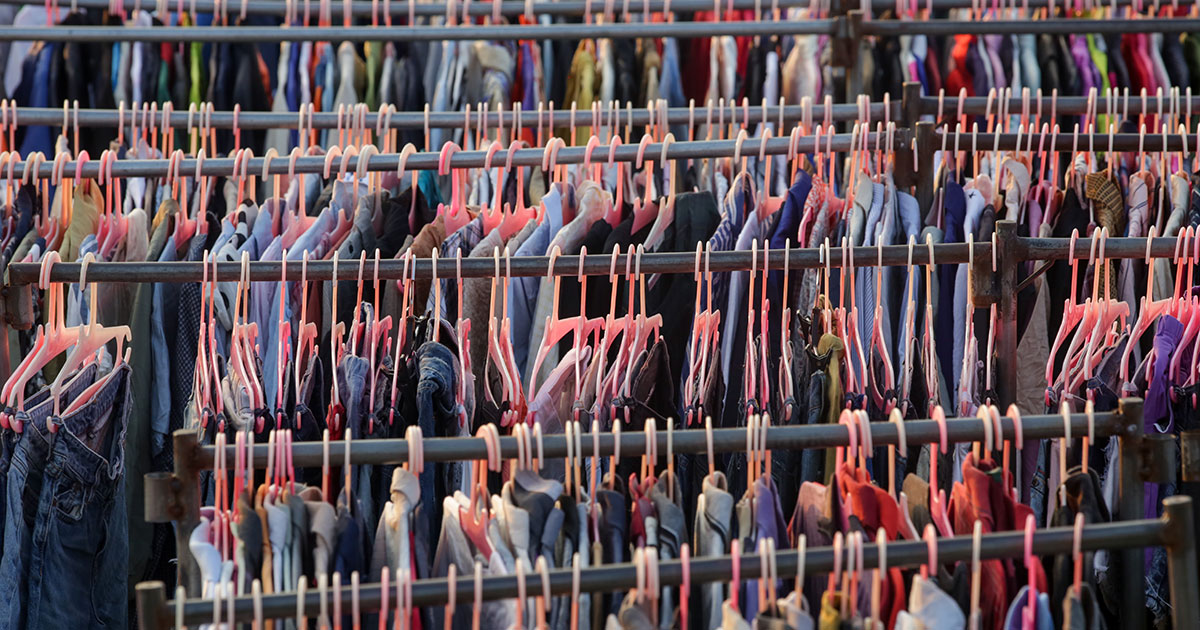
Simply put, fast fashion is the practice of making and selling clothes quickly and cheaply to get the latest trends into stores before they go out of style. It is a business model that thrives on one thing: more. More trends, more shopping hauls, more clothes — worn an average of just seven times and forgotten in landfills. Between 1990 and 2023, global clothing production more than doubled, yet we wear each garment about 40 percent less than we used to. The result is a growing mountain of waste we can no longer ignore.
The environmental and health toll
The fashion industry now accounts for roughly 10 percent of global carbon emissions, more than international flights and maritime shipping combined. Carbon is not the only thing this process releases. To meet demand for cheap clothing driven by rapidly changing fashion trends, brands rely heavily on synthetic fabrics like polyester, nylon, and acrylic. These materials are cheap to produce, but they come at a high cost.
Synthetic textiles are essentially plastic. Every time we wash them, they shed microplastics that slip through water treatment systems and end up in our oceans, soil, and even the air we breathe. These microplastics have been found everywhere from drinking water and seafood to human blood, raising concerns about long-term health effects, including endocrine disruption, cardiovascular disease, and cancer.
Industry pressure and consumer power
Despite pressure from governments, companies do not seem to be responding. For instance, the EU has launched a number of initiatives to make fashion more sustainable, including rules that clothes must last longer, be easier to recycle, and use less polluting materials. But these guidelines aren’t working yet. A recent survey found that nearly half of the big brands are actually using more synthetic fabrics like polyester than before, while only a few have cut back. Some even broke earlier promises to reduce plastics in their clothes.
Here’s the good news: Consumer habits matter. Everyday choices, such as what we buy, how often we shop, and how long we keep our clothes, change global environmental impacts. Just as fast fashion has been perpetuated by consumers buying clothes to keep up with short-lived trends, so can we reject this culture. Choosing fewer, better-made pieces, supporting ethical brands, and extending the life of what we already own can push the industry toward safer, longer-lasting, and non-toxic fashion.
Sustainable fashion doesn’t mean boring or expensive. It means buying and styling with intention and creativity. Because the most powerful trend we can follow is responsibility.
