Disaster response begins long before a storm makes landfall. While seasonal forecasts help inform awareness, true readiness comes from experience, preparation, and partnerships that enable communities to recover quickly when the unexpected happens.
For the 2026 hurricane season, World Central Kitchen (WCK) is fully prepared to respond across the Caribbean, Central America, Mexico, and the United States. Sixteen years of responding to hurricanes, floods, and other climate-driven disasters have taught us that even a forecasted below-average season can produce a catastrophic storm, and increasingly unpredictable weather means every season must be treated as a potential worst-case scenario.
“Preparation comes from experience. We don’t let the forecast change our preparation — we prepare for the worst, every time,” says WCK’s response director Juan Camilo.
That philosophy shapes every aspect of our readiness. WCK’s Response Operations Centers coordinate logistics across the hemisphere, while relief equipment, field kitchens, satellite communications systems, generators, and emergency kitchen kits are strategically pre-positioned for rapid deployment. Rather than stockpiling meals, WCK stores the equipment and infrastructure needed to establish community kitchens and begin preparing fresh meals within hours of a disaster. As Camilo explains, “We store the tools to cook, not warehouses full of food.”
Community and partnerships
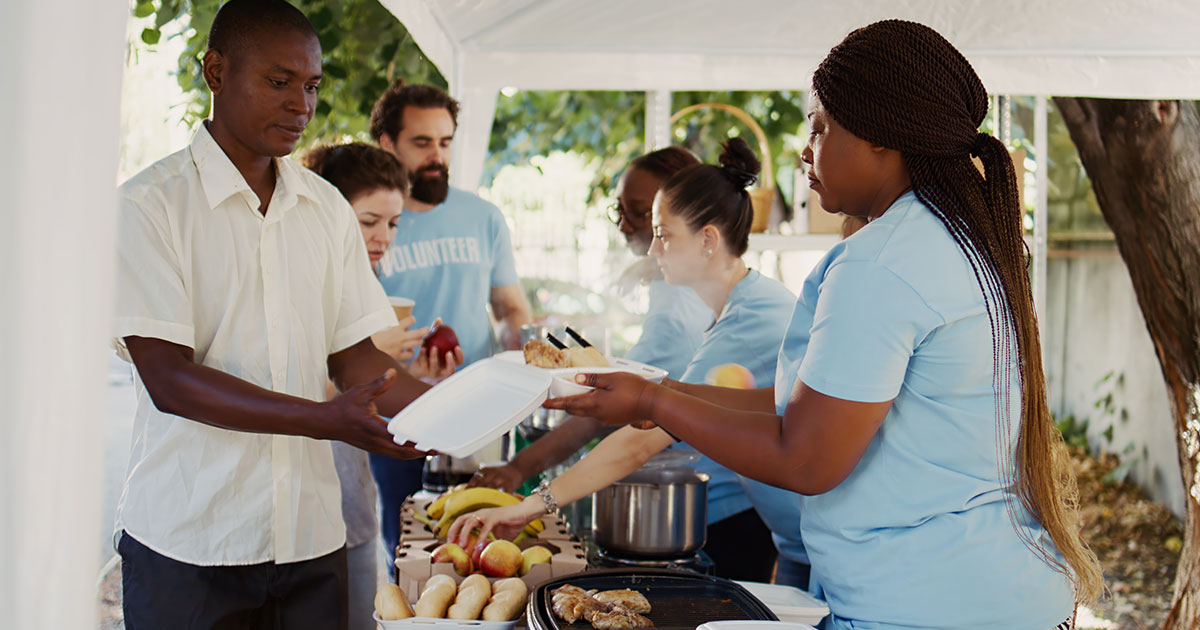
Yet, our greatest resource is not equipment; it’s people. Across the Americas, WCK has built a network of local chefs, restaurants, volunteers, and community organizations that understand their neighborhoods better than anyone. “In every response, the community is the expert,” Camilo says. Their local knowledge allows relief efforts to move faster and with greater dignity because they know what their communities need long before outside responders arrive.
That community-first approach is strengthened through partnerships that bring new capabilities to the field. Amazon’s disaster relief program is helping close one of the biggest gaps communities face after disasters: restoring power and connectivity when infrastructure has failed. Portable systems can rapidly provide satellite communications, solar energy, clean water, and other critical services that once took days or weeks to restore.
The partnership was put to the test after Hurricane Melissa devastated Jamaica. When Cornwall Regional Hospital lost its roof, electricity, and communications, portable satellite Wi-Fi and solar power restored critical connectivity within minutes, allowing hospital staff to coordinate patient care while traditional infrastructure remained offline. For WCK, portable batteries and communications systems also keep field kitchens operating after dark and response teams connected when cell networks collapse.
The power of working together
Together, WCK and Amazon demonstrate how humanitarian organizations and the private sector can complement one another. WCK brings community relationships, operational expertise, and local leadership, while Amazon contributes technology, logistics, and global supply chain capabilities. In doing so, we are helping eliminate the bottlenecks that often slow disaster response when every minute matters.
Ultimately, disaster response is about more than delivering meals or restoring power; it is about restoring stability, the local economy, dignity, and hope. However, WCK’s approach begins with something even simpler.
“As soon as it is safe after a storm, we go into communities and listen,” Camilo says. “We know our mission is to feed people as quickly as possible, but how we do that — what meals, what support, what scale — comes from the community itself.”
