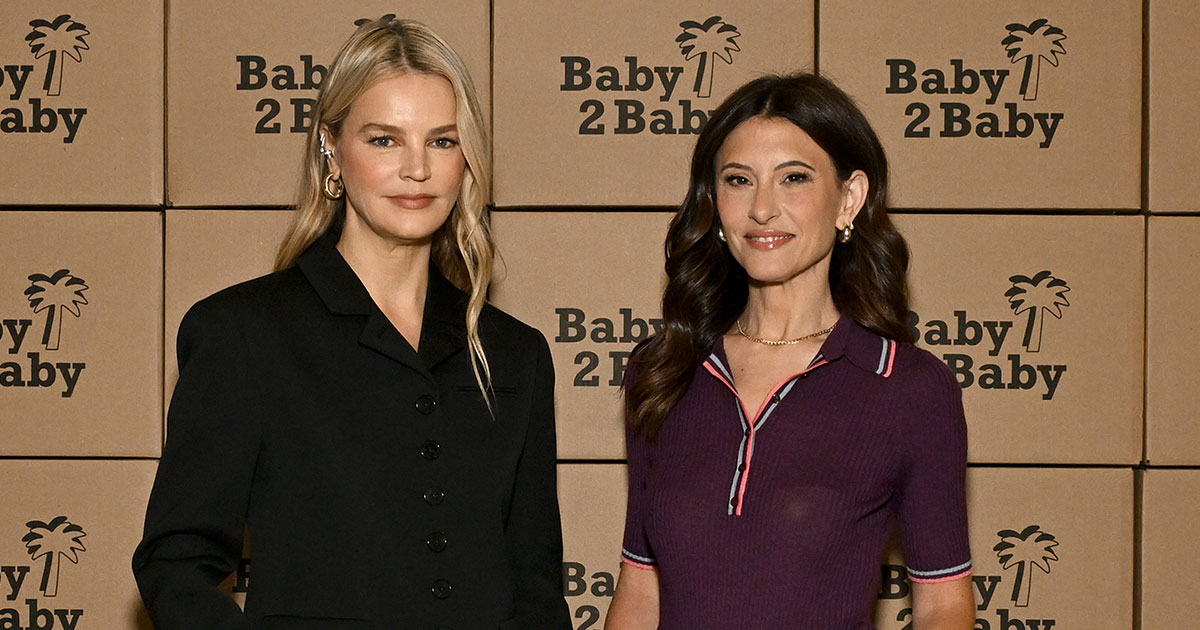

Kelly Sawyer Patricof and Norah Weinstein, the co-CEOs of Baby2Baby, discuss what children actually need after a disaster — and what they don’t.
What unique challenges do children and vulnerable families face during disasters, and how can communities better support their recovery?
There are many incredible organizations doing disaster relief work that are focused on food and shelter for adults, but Baby2Baby is specifically focused on supporting the needs of children. In the aftermath of any fire, hurricane, or emergency, families living in poverty are always the most vulnerable. They don’t have stockpiles of supplies on hand when disaster strikes or money set aside to pay for hotels if they’re forced to leave their homes.
We think it’s important for people to know what not to do during a disaster. Well-intentioned people will often send or drop off used clothing and donations without asking organizations on the ground what they actually need. While these acts come from a place of generosity, they can create significant challenges for response efforts. In the case of the Maui fires, these unsolicited donations were physically blocking roads and preventing lifesaving supplies like food and water from getting in. Instead, communities should follow the lead of trusted organizations on the ground and listen to what is needed.
How does Baby2Baby prepare to respond quickly when disasters strike, and what essential resources are most critical for families in the immediate aftermath?
Baby2Baby has responded to more than 100 disasters, including fires, floods, and hurricanes, over the last decade. We are prepared to respond quickly because it is year-round work. We have the infrastructure in place through ongoing partnerships with organizations serving children in 400 cities across all 50 states. We also pre-stage supplies in warehouses across the country so that we can get them to affected children and families as fast as possible.
Diapers, formula, bottled water when there is no safe drinking water, baby food, hygiene products, clothing, and portable cribs are always some of the most needed items for children.
Our largest response to date was the devastating Los Angeles fires in January 2025, where we distributed more than 38 million supplies to emergency evacuation shelters, homeless shelters, low-income housing sites, schools, early childcare centers, and resource centers. We are still supporting families a year and a half later as they continue to rebuild.
How do partnerships with businesses, nonprofits, and government organizations help Baby2Baby expand its disaster response efforts?
Our entire model is partnership-based. We provide essential items to 1,000 organizations across the country, including homeless and domestic violence shelters, foster care agencies, school districts, and hospitals. When a disaster hits, we often already have supplies on the ground in that city.
We partner with frontline disaster relief organizations, including the Red Cross and the Salvation Army, to get children’s items into their emergency shelters. Even the Federal Emergency Management Agency and the U.S. Department of Agriculture reached out to Baby2Baby to provide baby formula during the formula shortage crisis. We also coordinate with city and state emergency management agencies to assess and fulfill the most urgent requests for children.
Corporate partners are a key part of our disaster response. They donate large-scale, palletized items in our most needed categories. They come to us wanting to support and trusting that Baby2Baby will get their items into the right hands. Last year, we distributed more than $60 million worth of donated goods for families affected by disasters across the country.
What steps can families and organizations take now to better prepare for future emergencies?
Pre-positioning supplies has become a key part of our response strategy. We know what the overall needs for children are going to be now, regardless of the disaster. Organizations can fundraise year-round for this work, get the supplies ready, and establish the relationships, since there isn’t time once disaster strikes.
At the same time, we are always gathering feedback after each emergency and evolving from there. For example, we now keep air purifiers and children’s N95 masks in our year-round disaster relief inventory, since they continue to be among the most needed items during and after a fire.
From 15 years of focusing on the needs of children, we’ve learned to listen to the requests on the ground and only then provide our partners with exactly what is most urgent — in the amounts they can handle and in the shortest timeline possible.
