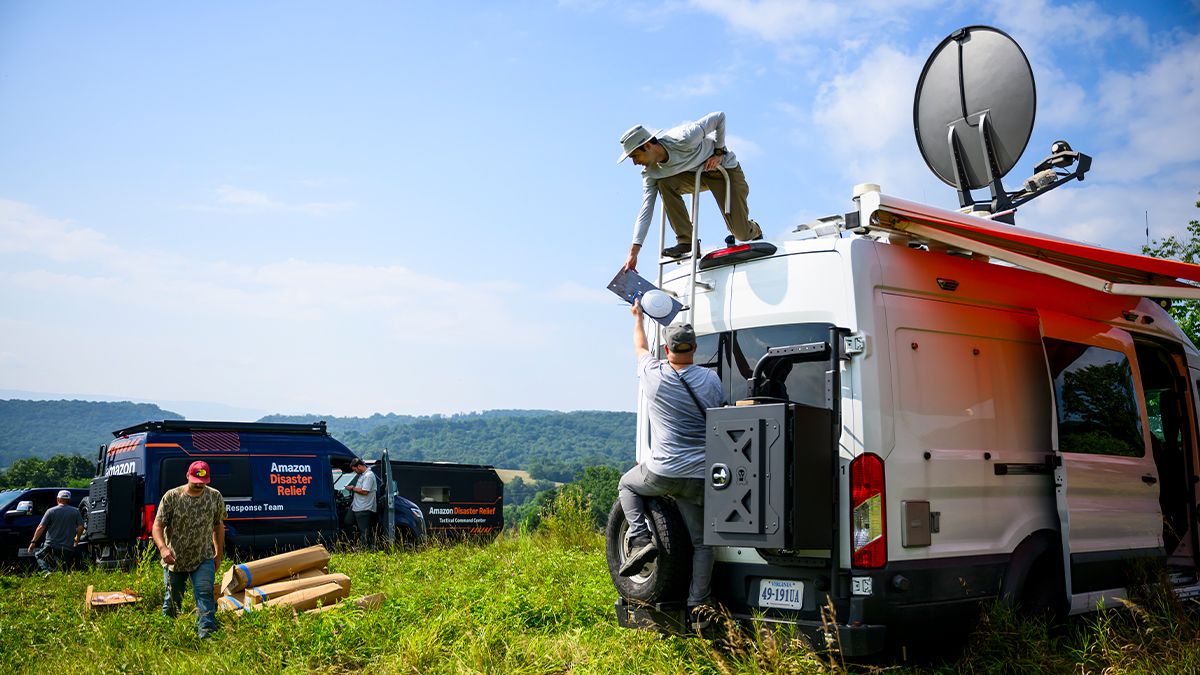

When a hurricane, flood, or wildfire hits, the danger doesn’t end when the storm passes. Families are separated, hospitals lose power, and entire communities go dark. Leaders across sectors say the same thing — how fast communities recover comes down to connection.

Marlena Hartz
Amazon Disaster Relief
Estimated reading time: 6 minutes
Connection can mean many things in the aftermath of a disaster. For neighborhoods hard-hit after Hurricane Helene, connection came when neighbors looked out for neighbors and shared generators, trucks, and food in the hours and days after the storm. For families, connection often means the ability to use a cell phone and call a loved one. For first responders, it means having tools for relief like Wi-Fi for information sharing or drones for search-and-rescue missions.
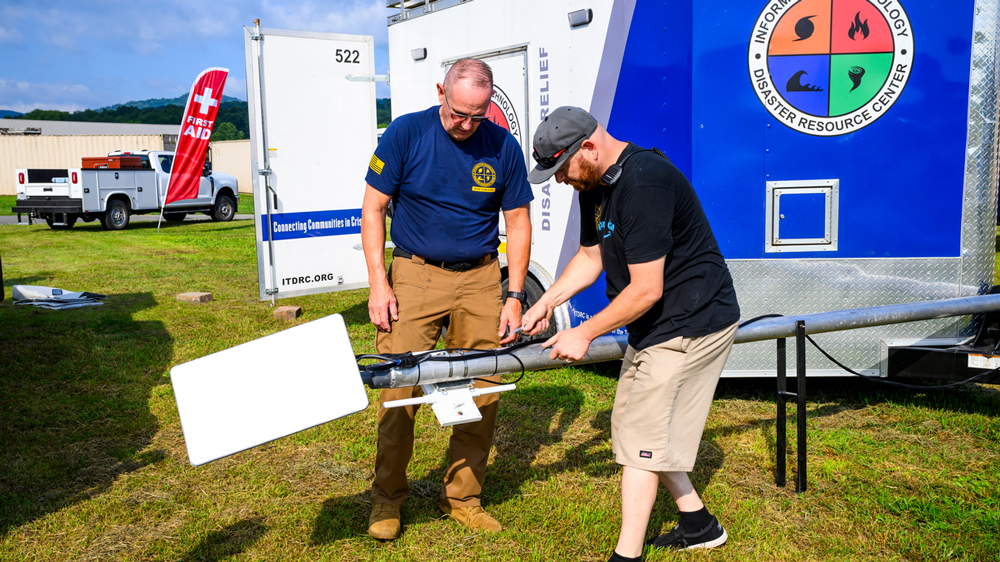
“Technology is the very fabric that connects responders to responders, and responders with survivors,” said Rodney Cooper, director of technical programs at Information Technology Disaster Resource Center (ITDRC). “When those systems fail, the consequences become operational very quickly.”
Bridging the gap.
Technology to restore critical services exists but it’s often out of reach for many nonprofit organizations, costing $5,000 to $250,000. And when organizations could afford it, they couldn’t get it where it was needed, fast.
“I kept seeing the same failures repeat after every disaster — communities cut off from power, communication, and clean water with no fast solution,” said Jeffrey Schweitzer, Amazon’s disaster relief innovation and technology lead.
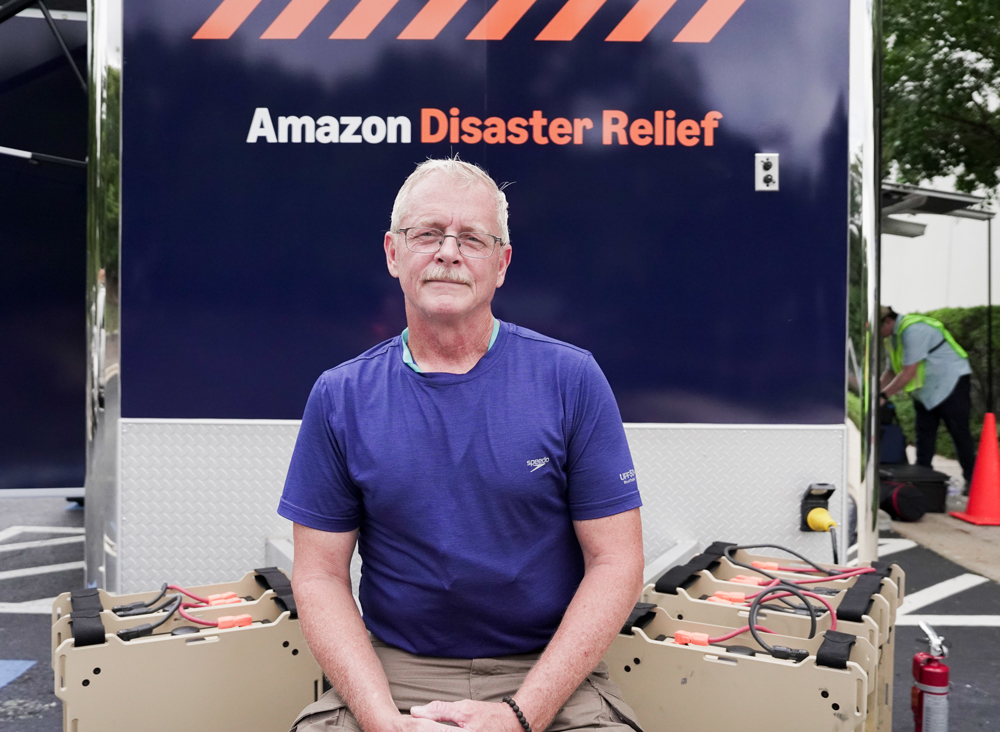
Working alongside community partners who understand local needs best, Schweitzer and his team at Amazon developed rapid response technology systems — portable, easy-to-use technology systems — and made them available to nonprofits at no cost.
Each system restores a critical service, designed so one person can carry it and set it up. One produces clean drinking water from a contaminated source. Another uses drones to map dangerous terrain so first responders can quickly find people who need help. Another sets up a satellite-powered Wi-Fi network — no special expertise required.
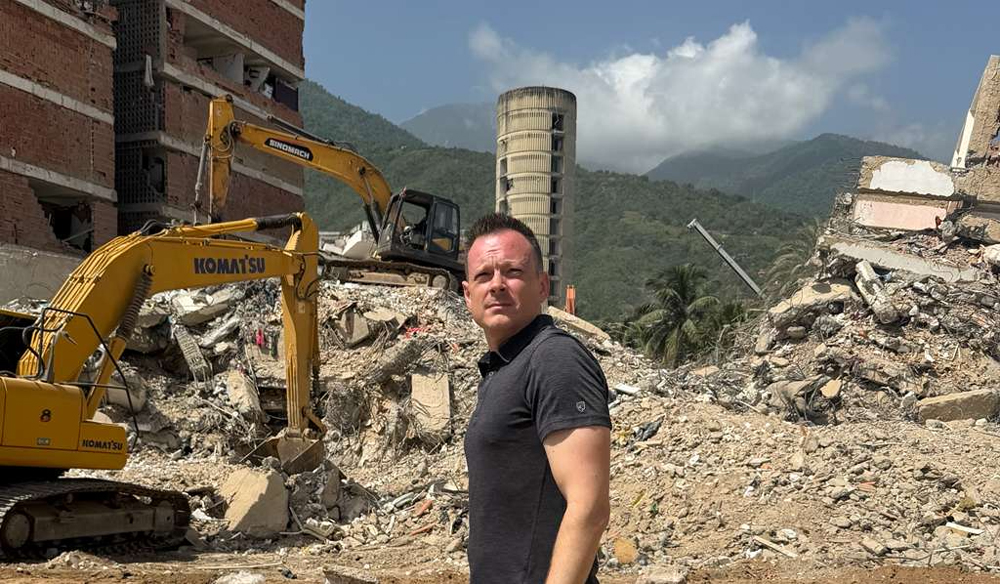
After Hurricane Melissa knocked out a hospital’s power in Jamaica, Amazon’s technology helped responders restore connectivity within 30 minutes of arrival. When twin earthquakes struck Venezuela, Amazon delivered its rapid response technology systems to hospitals and shelters so they could get back online.
The technology has supported wildfire relief, too. “During the 2023 Maui wildfires, Amazon brought personnel, equipment, and operational support into a response where needs were changing by the hour,” Cooper said. “We provided off-network trackers to Maui Police, giving more than 50 public safety personnel another way to maintain accountability when both wired and wireless communications were unreliable.”
By 2027, Amazon will provide more than 2,000 of its rapid response technology systems to partners at no cost — a 50x expansion. More than 800 are ready to ship this hurricane season alone.
But technology alone isn’t enough.
While technology is important, these systems can’t bring communities back online without people. Leaders in disaster relief technology emphasize the same thing: Relationships must be built before disasters strike.
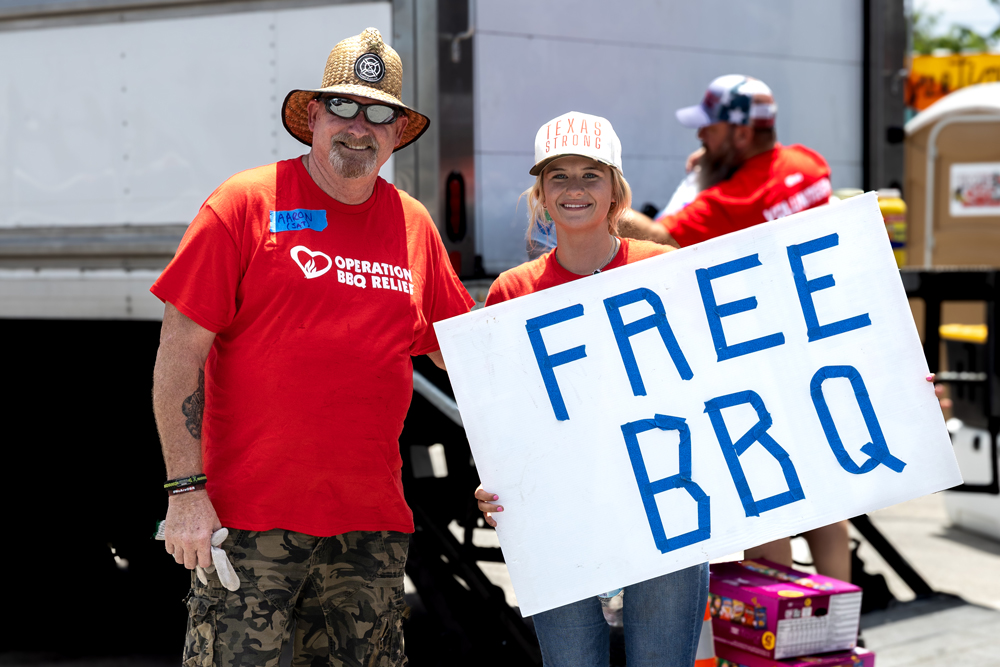
“Technology will continue to improve, but the greatest opportunity is using it to connect people,” said Jeremy Bruce, senior head of technology, communications, and volunteer from Operation BBQ Relief. “When experienced disaster organizations, technology partners, government agencies, communities, and volunteers work together, we can respond faster, reduce duplication, and help communities begin recovering sooner.”
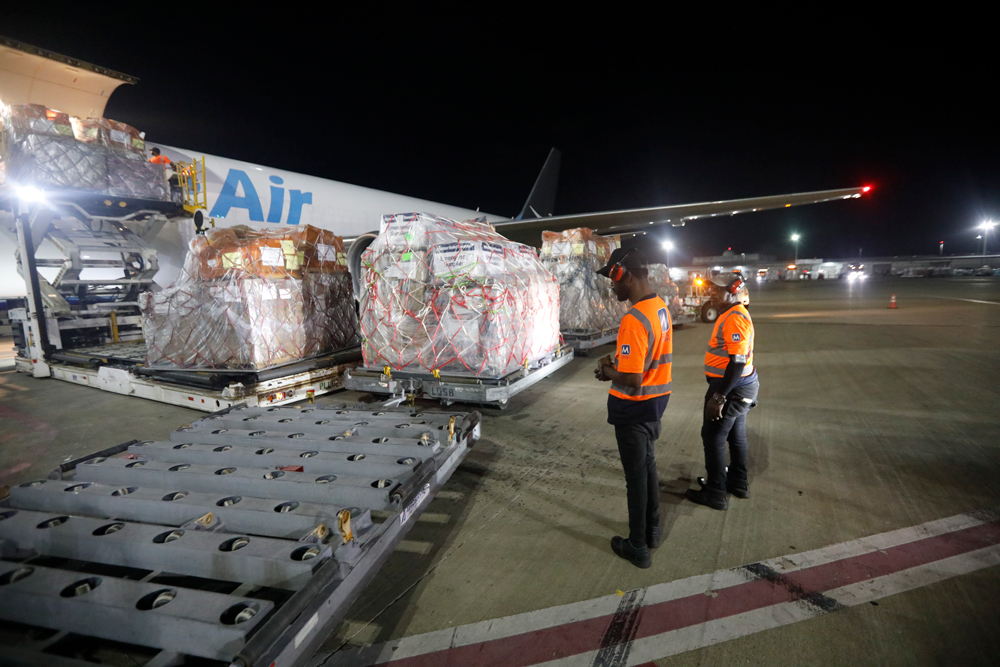
Amazon works with nonprofits to stock essential supplies at warehouses near disaster-prone areas long before the need arises, so that aid arrives within hours, not days. Since 2017, Amazon has donated more than 30 million relief items across more than 200 disasters worldwide.
How you can prepare — and what gives responders hope.
National Preparedness Month serves as a reminder to revisit your family’s plan. “A few minutes of preparation before a disaster can make a significant difference when power, cellular service, or internet access becomes unreliable,” Bruce said.
Decide in advance how your family will communicate and where you’ll reconnect if separated, enable emergency alerts on your phone, and keep solar chargers handy.
And while natural disasters grow more frequent and severe, the people who respond to them remain hopeful. “People drop what they’re doing, roll up their sleeves, and step forward for people they may never have met, often without sharing the same language or background,” said Nate Mook, CEO of All Hands & Hearts.
For Amazon, disaster relief is part of being a good neighbor in communities around the world. “The communities that recover fastest are the ones where leaders already know who to call and what to ask for when the lights go out,” Schweitzer reflected. “We create the best outcomes when we work together.”
Learn more about how you can support All Hands & Hearts, Operation BBQ Relief, and ITDRC, all of which rely on donations and volunteers to serve communities after disasters strike. For more information about Amazon’s disaster relief program, visit aboutamazon.com.
