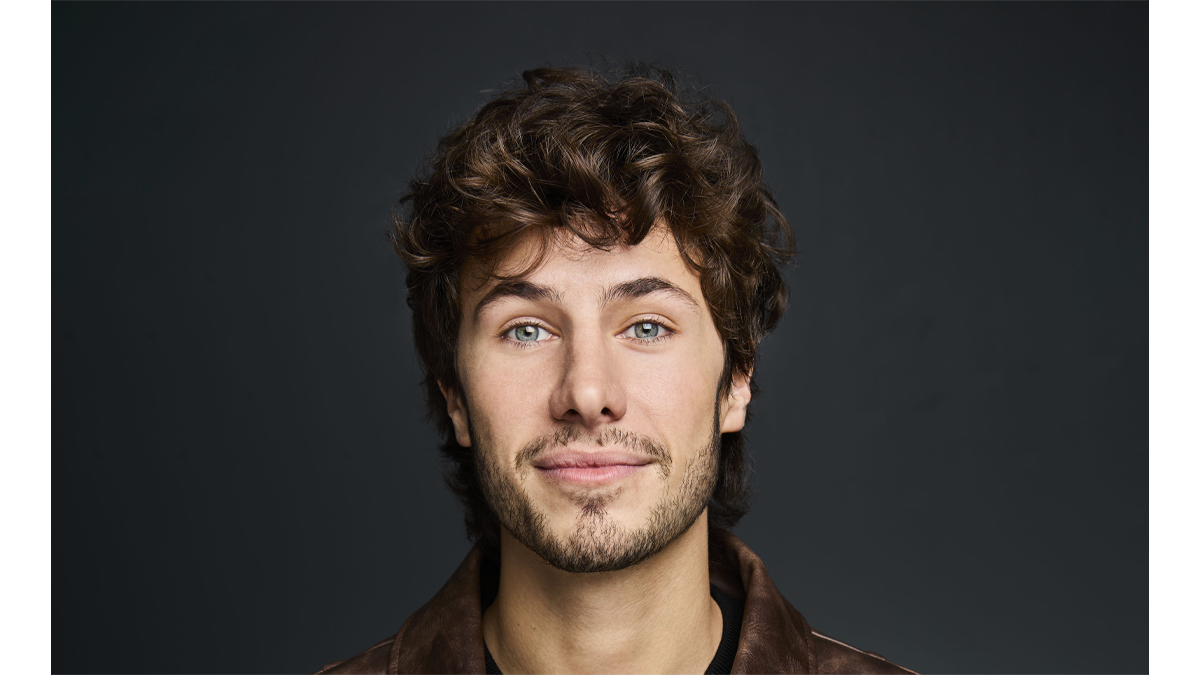
Internet personality, actor, and model Juanpa Zurita reflects on sharing his creativity and Latino heritage with the world, the impact he’s been able to make beyond entertainment, and his message for others looking to break into the industry.
Estimated reading time: 7 minutes
Looking back at your journey from your early days on Vine to building a global platform, how has your sense of identity and cultural background shaped the way you move through creative spaces?
I truly believe creativity is embedded in Latin culture. It’s part of our DNA.
One thing I’ve noticed across Latin America is that we’re incredible problem solvers. We learn to think outside the box not because it’s trendy, but because, many times, it’s necessary. We’ve grown up finding ways to move forward even when systems don’t work the way they should. We don’t take “no” as the final answer—we look for another path until we find a “yes.”
That mindset of resilience, execution, and creativity has shaped every stage of my career over the past thirteen years. It’s influenced the way I build companies, tell stories, and approach every creative challenge.
I’m incredibly proud to come from Mexico and from Latin America because I genuinely believe those values have played a huge role in whatever success I’ve been fortunate enough to achieve.
What was a turning point where you realized your platform could be used for something beyond entertainment?
There have been several moments throughout my career, but the biggest turning point was working on Love Army.
It was one of the earliest social media initiatives that really tested how much real-world impact a digital community could create. During our mission in Somalia, we raised over a million dollars to provide food and clean water during a devastating drought. Later, after the 2017 earthquake in Mexico, we raised another $1.4 million and helped rebuild 47 homes alongside an extraordinary team of architects—including one Pritzker Prize winner.
Those experiences completely changed the way I viewed influence. They also taught me an equally important lesson: while social media is incredibly powerful for creating awareness and mobilizing people, execution should always be left to professionals. Good intentions aren’t enough—real impact requires expertise, infrastructure, and accountability.
Today my primary focus is entertainment, but I still believe storytelling can amplify causes, ideas, and people who deserve attention.
Ironically, though, the most personal turning point wasn’t measured in dollars or headlines.
It was the first time a complete stranger told me they had decided to try something new because of something I had shared.
Changing someone’s habits or mindset is incredibly difficult—even in your own life. Knowing that something I created could encourage another person to take action made me realize that impact isn’t only about scale. Sometimes it’s about helping one person believe they’re capable of something they hadn’t considered before.
When you think about impact, what does meaningful impact look like for you?
For me, impact begins with a simple question: What is someone receiving in exchange for their time?
Time is the most valuable thing any audience gives you, so I believe every piece of content should give something back.
Sometimes that’s as simple as making someone laugh on a difficult day. Sometimes it’s helping them disconnect for a few minutes. Other times, it’s much deeper—it can change the way someone thinks, encourage them to build a new habit, learn a new skill, or see themselves differently.
One message that’s especially important to me is reminding people that feeling different is not a weakness. If you grew up feeling like the odd one out, if you were bullied, or if you never felt like you fit in, those differences may end up becoming your greatest strength. They’re often the source of your originality.
I’m also passionate about changing the conversation around ADHD because I live with it myself. When it’s understood and managed properly, I genuinely believe it can become a tremendous creative advantage rather than something that holds you back.
And finally, I’m deeply proud of where I come from. So much of who I am—and so much of my career—exists because I was raised in Mexico and in Latin America.
Ultimately, meaningful impact is knowing that your work becomes bigger than your own achievements. I’ve learned that sharing the process, the failures, the lessons, and the journey often inspires people far more than simply sharing the results. Ironically, that’s also what gives me the greatest sense of purpose.
I always feel a little uncomfortable answering questions like this because I never want anyone to believe there’s a single formula for success. The only thing I can honestly share is what’s worked for me. It may not work exactly the same way for someone else, but hopefully it sparks an idea.
If you’re Latino, I’d encourage you to embrace the qualities that make our culture so unique. We are resourceful. We are creative. We are resilient. We are passionate. We care deeply about people. We know how to solve problems. Those aren’t just cultural stereotypes—they’re competitive advantages.
Kindness is an advantage. Creativity is an advantage. Resourcefulness is an advantage. Passion is an advantage. In every industry I’ve been fortunate enough to work in, those qualities have mattered just as much as talent.
At the same time, I think there’s an important balance to find.
I’m incredibly proud to be Mexican. I’m incredibly proud to be Latino. It’s a huge part of who I am—but it isn’t the only thing that defines me.
Sometimes the world will try to put you in a box before you’ve had the chance to introduce yourself. Don’t let that become your own definition. Your heritage is part of your identity, not the limit of your potential.
Especially in places where you may feel like an outsider, it’s easy to focus on the disadvantages. Instead, focus relentlessly on what you can control. Every obstacle, every extra mile you have to walk, every challenge you overcome is building something far more valuable than immediate success: it’s building character. And character compounds over a lifetime.
The other piece of advice I’d give is simple: start sooner than you think you’re ready.
You’ll fail—and I know that’s probably not what anyone wants to hear—but failure is the fastest education you’ll ever receive.
If you don’t know what your path is yet, try many things. That’s not wasted time; that’s how you discover what truly excites you.
Because at some point, talent stops carrying you. Passion takes over.
You have to find something you love deeply enough to keep showing up when it’s difficult. The only way to find that thing is to explore widely until something makes you think, “I’d do this even if nobody were watching.”
What does it mean to you to be a Mexican creator with such a global platform?
Early in my career, I felt a tremendous responsibility to live up to what I thought people expected from someone representing Mexico on a global stage.
But after more than a decade in the spotlight, I’ve realized that constantly looking outward—trying to become who everyone else wants you to be—is a dangerous trap. Eventually, you start emptying yourself in order to satisfy expectations that never really end. The greatest way I can honor where I come from isn’t by trying to perform “Mexicanness.” It’s by being unapologetically myself.
Of course I’ve evolved over the years—and I hope I continue to evolve for the rest of my life—but evolution should never come at the expense of authenticity.
Ironically, the more I’ve embraced who I genuinely am, the more people around the world have connected with my culture. Whether it’s celebrating a Mexican football victory (yes, it’s football, and no, it’s not soccer—I’m so sorry), joking about things every Mexican family instantly understands, talking about tacos, or simply sharing the way I grew up, I’ve learned that authenticity travels much farther than performance ever will.
I’ve also realized that celebrating other Latino artists, athletes, and creators is part of that responsibility. Every time someone like Guillermo del Toro, Luis Gerardo Méndez, Latin Mafia, Isaac del Toro, Marcelo Hernández, or one of the countless other Latinos doing extraordinary work succeeds, they make the path a little wider for the next generation. Representation isn’t a competition; it’s something we build together.
Being recognized as a Mexican creator with a global platform is an incredible honor. But it’s important to me that it always remains a consequence—not the goal.
The goal is to tell honest stories, build meaningful work, and stay true to the person I am becoming.
If I can do that consistently, then everything else—including whatever responsibility comes with visibility—will naturally follow.
And if I may end this interview with one last message…
¡Viva México, cabrones!
Y a toda mi gente de Latinoamérica: gracias.
Gracias por permitirme ser parte de sus vidas durante todos estos años. Nunca voy a dar eso por sentado y espero que sigamos construyendo cosas increíbles juntos por muchísimo tiempo más.
Los quiero muchísimo. Pásenla bonito, y sobre todo, síganla rompiendo.
Con mucho cariño,
Juanpa
