

As Latinos drive U.S. population and workforce growth, their educational success determines the country’s future. Here’s why investing in that success is a strategic imperative, not optional.
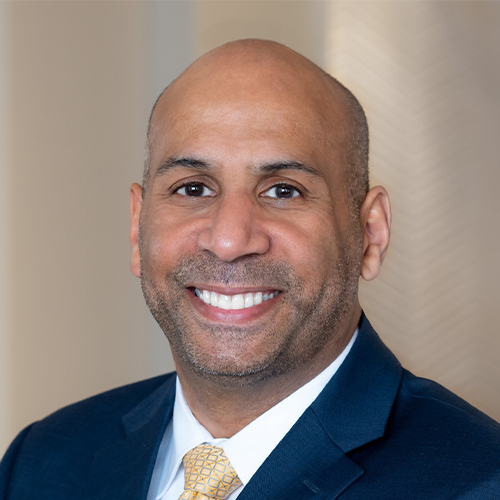
Marco Davis
President & CEO, The Congressional Hispanic Caucus Institute (CHCI)
Estimated reading time: 4 minutes
America’s future will be increasingly shaped by the success of its Latino population. Today, from Los Angeles and New York to some of the most rural communities throughout the country, Latinos are one of the fastest-growing forces in American society. We are nearly 20 percent of the U.S. population, and by 2050, one in three children under 18 is expected to be Hispanic.
That growth is not just a demographic fact. It is a defining question for the future of the country. Latinos are projected to account for 78 percent of new U.S. workers between 2020 and 2030, helping the United States maintain a growing labor force at a time when global competitors face shrinking and aging populations. In other words, the country’s economic strength, workforce readiness, and global competitiveness will increasingly depend on whether today’s Latino and Hispanic students are prepared to succeed.
These students are a central part of America’s future. When they do not have the tools to reach key academic markers, the consequences play out beyond the classroom. They shape whether students graduate high school, attend college, build careers, earn higher wages, and step into leadership roles that can help direct the future of our country. When Latino students are held back, the country holds itself back.
But the story of Latino educational achievement is not a story of deficit. It is a story of persistence.
Latino families deeply value education. Every day, parents push their children to dream bigger, keep going, and succeed. That is why, after decades of underinvestment in the promise of the Latino community, we should ask: what would happen if our families’ and children’s determination to succeed was met with full investment by our society?
Despite these ongoing barriers, the community has managed to become an economic engine for the nation. According to a 2026 UCLA study, the U.S. Latino GDP is now an estimated $4.4 trillion, making it an economic powerhouse – as an independent nation, it would be the fourth largest in the world, surpassing Japan’s. If Latinos have built this level of economic power while being undervalued and denied the full investment our communities deserve, imagine what becomes possible when we fully invest in the future of our children.
Investing in Latino education means strengthening K-12 schools, expanding early literacy and math support, making college more affordable, and providing mentorship and leadership development opportunities that take our students from the classroom to C-Suite offices and the halls of Congress. It also means recognizing that students don’t learn in isolation. As a country, we need to address serious issues like food security, housing stability, and safe neighborhoods because parents cannot fully support their children’s education when they are struggling to meet basic needs.
The work of eliminating educational barriers belongs to everyone: parents, educators, school boards, community leaders, business leaders, and public officials – including Members of Congress. The question is not whether Latino and Hispanic students can succeed. They already have, often in spite of systems that were not built for them.
When Latino students rise, America rises. Investing in Latino educational progress is not charity. It is not a side issue. It is one of the smartest strategic decisions we as a nation can make for our economy, our leadership, and our future.
References
- Latinos are among fastest-growing racial or ethnic group: Key facts about U.S. Latinos, Pew Research Center
- By 2050, one in three children under 18 is expected to be Hispanic. & Explains how poverty associated stressors (like food insecurity and unsafe neighborhoods) affect brain development and academic performance.: Nearly Half of Hispanic Children Live in Families with Low Incomes, Child Trends, Jan 2026
- 78% of projected new workers between 2020 and 20230 will be Latino: Workforce Development, UnidosUS
- U.S. main global competitors have shrinking workforces and Latino GDP is now 4th larges in the world: Deportations may loom but the future is still Latino as their GDP hits fourth largest in the world, UCLA
- Hispanic students are often underserved by their schools, contributing to lower educational attainment and lower wages. & Student success is heavily influenced by family resources like income, housing, food security.: Improving K-12 education for Hispanic students in Las Vegas and beyond, Brookings
